Mahjong is one of the most beloved games across Asia and beyond, with a rich history, countless variations, and a strong social aspect that keeps players hooked for life. But if you’re new to the game (or even if you’re an experienced player looking to upgrade your set), buying the right Mahjong set can be a surprisingly tricky decision.
That’s because Mahjong isn’t a single, universal game—different countries and regions have their own rules, scoring systems, and even unique tiles. The set you buy will depend entirely on the style of mahjong you play. From American mahjong with its distinctive joker tiles and racks, to Japanese riichi with its slimmer tiles and scoring sticks, to classic Chinese styles with clean, minimalist designs, each variation has its own must-have features.Choosing the wrong set can mean you end up with extra tiles you never use… or missing tiles you actually need.
In this guide, we’ll walk you through the main types of Mahjong sets, their differences, and tips on how to pick the one that’s right for you.
# learn mahjong online
Book Our Online Lesson
Struggling to learn Mahjong on your own? Our London-based Mahjong school offers Saturday lessons for beginners. Good news, we also offer online sessions for your convenience. Book your online lesson today and start mastering the game!
1. Chinese Mahjong Sets
Best for: Versatility and traditional Asian play styles.
Chinese Mahjong sets are the most common worldwide and usually contain 144 tiles. These include:
- Suits: Dots (Circles), Bamboo, Characters
- Honors: Winds (East, South, West, North) and Dragons (Red, Green, White)
- Bonus Tiles: 8 total — 4 Flowers and 4 Seasons
Chinese sets are used in:
- Chinese Official International Rules (MCR) — used in tournaments worldwide
- Hong Kong Old Style
- Singaporean and Malaysian Mahjong
If you’re just starting out and want a set that works for multiple styles, this is your safest bet. You can adapt it for Japanese Riichi by removing the Flowers and Seasons, or play Taiwanese Mahjong by adding extra bonus tiles.
2. Japanese Mahjong (Riichi) Sets
Best for: Riichi fans, anime/manga lovers, or those who prefer faster, tactical play.
Japanese Mahjong—often called Riichi Mahjong—is played with 136 tiles, which means:
- No Flowers or Seasons.
- Suits and honors are the same as the Chinese set.
What makes Riichi sets unique:
- Red Fives (Aka Dora): Special red-colored 5 tiles (usually one per suit) that give bonus points.
- Tile Size: Typically smaller and lighter than Chinese tiles, making the game faster and easier to handle.
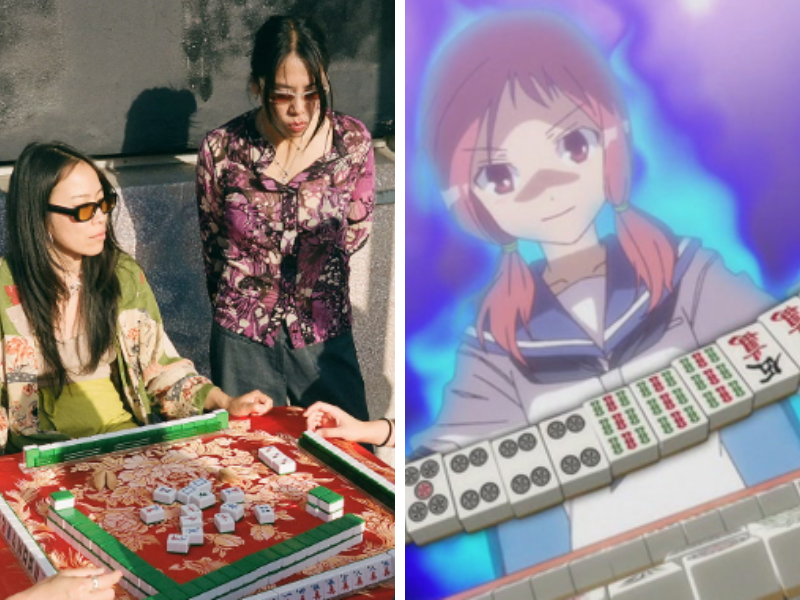
Why choose Riichi? If you’ve seen Mahjong in anime like Akagi or Saki, or if you like the idea of a poker-style strategic game with bluffing, declaring “Riichi,” and dramatic swings in scoring, this is the set for you.
3. American Mahjong Sets
Best for: Players in the US following National Mah Jongg League (NMJL) rules.
American Mahjong is quite different from Asian versions. Sets usually have 152 tiles, including:
- Standard suits and honors
- 8 Jokers
- Extra Flowers
They also come with racks and pushers (like in Scrabble) to organise tiles and assist with discarding.
Rules are set by the NMJL and change annually—you’ll need a yearly rule card to know which hands are valid. If you’re not in the US or don’t plan to play American style, these sets can be less versatile.
4. British Mahjong Sets
Best for: UK players following British rules, which are loosely based on Chinese Old Style.
British sets are often marketed as “Chinese style” but packaged for English-speaking markets. The tile set is similar to a Chinese set (144 tiles), but the scoring rules differ.
If you buy a British-marketed set, you can still play Chinese-style Mahjong—it’s mainly the instruction manual and packaging that differ.
5. Taiwanese Mahjong Sets
Best for: Fans of longer games with more complex hands.
Taiwanese Mahjong uses a 16-tile hand instead of 13 and often includes:
- 144 standard tiles
- Extra Flowers (sometimes 8 instead of 4)
- In some cases, Animal tiles for special bonuses.
This style is less common internationally, but if you’re from Taiwan or have Taiwanese friends, it’s a unique and highly strategic variation.
Tile Materials and Quality
When choosing a Mahjong set, you’ll notice a variety of materials and finishes:
- Acrylic / Plastic: The most common today—durable, affordable, and easy to clean.
- Bakelite: Vintage feel, heavier weight, and a satisfying sound. Collectible but more expensive.
- Bone & Bamboo: Traditional handmade style, often used in antique sets. Beautiful but can be expensive and require more care.
Tile size matters too:
- Large tiles (35–40mm tall) are easier to handle but heavier.
- Smaller tiles (28–32mm) are faster for competitive play but can feel cramped.
Which Set Should You Buy?
Here’s a quick decision guide:
| Your Goal | Best Set |
|---|---|
| To play Hong Kong/ Chinese/ Singapore/ Malaysian Style | Chinese set (144 tiles) |
| Only play Riichi style | Riichi set (136 tiles, red fives) |
| Playing in the US with NMJL rules | American set (152 tiles with jokers) |
| Taiwanese friends / community | Taiwanese set with extra Flowers |
If you’re not sure yet, go for a Chinese 144-tile set. It’s the most adaptable, letting you play Chinese, Hong Kong, Singaporean, and even Riichi (just remove Flowers/Seasons). Once you settle into a preferred style, you can invest in a specialised set later.
#mahjong_dearasia
London Mahjong School
Join Dear Asia, London’s vibrant Mahjong school! Attend our fun Saturday workshops or hire a private instructor to host exciting Mahjong events at home or work. Let’s make your next gathering unforgettable!