How to look for a Mahjong Club near you to play Mahjong regularly?
Why there are Mahjong clubs in China everywhere?
If you’ve ever tried to find a regular Mahjong club in your area—especially outside of major cities like London—you’ve probably hit a wall pretty quickly. While the capital might offer slightly better odds, across most of the UK, opportunities to play Mahjong regularly are few and far between.
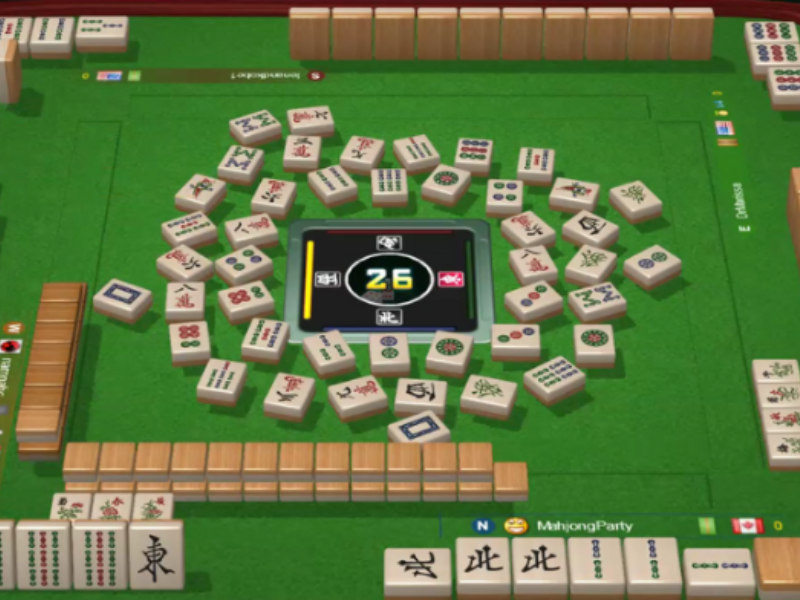
In contrast, Mahjong in China is everywhere. You might have seen videos or heard stories of Mahjong games happening in parks, on street corners, or in residential courtyards. Once the tables are put down, people just show up—it’s part of the daily rhythm. From early morning to late evening, you’ll hear the familiar click of tiles echoing through neighbourhood squares as people come and go, joining games as naturally as grabbing a cup of tea.
And then there are the buzzing commercial parlours—fast-paced, competitive, and often packed with players. Some are open and relaxed, welcoming anyone who wants to play. Others are more intense, sometimes involving money, and typically draw in a mostly male crowd. But whatever the setting, one thing is certain: you don’t have to look far to find a game.
That’s not the case in London—or most Western cities.
# learn mahjong online
Book Our Online Lesson
Struggling to learn Mahjong on your own? Our London-based Mahjong school offers Saturday lessons for beginners. Good news, we also offer online sessions for your convenience. Book your online lesson today and start mastering the game!
The Mahjong Culture Gap
In the West, Mahjong hasn’t yet developed that same infrastructure or visibility. Yes, people are playing. Yes, there’s growing interest—especially with Mahjong popping up in films, books, and social media. And yes, we are definitely seeing a Mahjong renaissance, with more and more people wanting to learn and play.
But there’s a gap.
A big one.
People want to play, but they don’t know where to go.
They want to keep practising after learning the basics, but there’s no regular club that welcomes beginners.
They Google “Mahjong club near me” and come up short.
So where can you play mahjong regularly?
At the moment, options are scattered. As far as we know, there are three main types of spaces for Mahjong players in the UK:
- Community Centres – These are often linked to Chinese, Hong Kong, Taiwanese, or other ESEA (East and Southeast Asian) communities. Before Mahjong started trending among younger generations, these spaces primarily served older or senior members of Asian immigrant communities. But things are changing. We’re really happy to see places like Four Winds in Dalston now attracting a new generation of players—first- or second-generation Asians who are reconnecting with their cultural roots and building friendships around the Mahjong table. It’s a beautiful thing to witness. That said, community centres like these naturally prioritise their own communities. Space is limited, and activities are often focused on serving members—so for those outside the community or new to Mahjong, it can still be difficult to find a seat at the table.
- Private Groups – In Southeast London, for example, there are groups like UA3 where senior citizens gather regularly to play Mahjong. If you’re lucky enough to have one of these groups near your home, that’s great news! The not-so-great news? These sessions are usually held during office hours. So unless you’re retired, it might be hard to make it work with your schedule. On the flip side, there are also Meetup groups and similar hobby circles that organise local Mahjong sessions—often hosted in cafés or pubs. We love these grassroots communities. They’re a brilliant way for Mahjong enthusiasts to connect, meet new people, and share games in a casual setting. Most of these groups are warm and welcoming to newcomers, and if you’re lucky, someone might even teach you the basics. The cost is usually low—often just a small ticket fee or a gentle nudge to buy a drink or snack to support the venue.
- Our School – Dear Asia Mahjong – This is where we come in. We exist to fill the gap between learning and playing. We’re not a commercial club, and we’re not a private, volunteer-led group. We’re a Mahjong school—open to everyone, and proudly focused on teaching. As educators by profession, we bring clarity, patience, and structure to something that can feel intimidating at first. Most importantly, we’re passionate about helping people find their rhythm in the game. Whether you’re completely new or returning after years away, our aim is to make Mahjong approachable, engaging, and something you can genuinely fall in love with.
Our background story
Let me tell you a bit more about our story.
So how did Dear Asia Mahjong begin? Let me tell you a bit about our story. Years ago, when I was still a full-time teacher, I loved organising cultural social nights for my students—Mahjong nights, poker nights, karaoke nights, you name it. That spirit of sharing culture and connecting people through fun and meaningful activities has always been at the heart of our school. Back then, when I introduced Mahjong to students, I did what many of us do—I let everyone sit down and jump into a game. But without the proper introduction or a clear, logical way to learn, most students felt confused and overwhelmed. Honestly, many gave up after one or two games, and our Mahjong nights quietly faded out, unlike poker or karaoke, which thrived.
Fast forward to summer 2024. We were planning some relaxed Saturday socials—something like a board game afternoon—and thought, why not give Mahjong another go? But this time, we did it differently. Instead of tossing players into a game and hoping they picked it up, we decided to teach Mahjong using the method we know best: task-based learning. We created worksheets and broke the game down into small, manageable tasks. Most importantly, we focused the first 90 minutes entirely on just playing—no complex rules, no scoring systems, just the flow of the game. Only once students felt comfortable did we introduce scoring and strategy.
And it worked. The response was phenomenal. Students picked it up quickly, had fun, and this time, they wanted more. They asked when the next session was and came back. By Lunar New Year 2025, we opened a few more workshops to the public. We put tickets on Eventbrite, not expecting much—and they sold out almost immediately. People told us, “I’ve been looking for somewhere to learn Mahjong. You’re exactly what I’ve been searching for.” We realised there was a real hunger to learn, to play, and to be part of a Mahjong community.
But after a few workshops, another question kept coming up: “Where can I keep playing?” We pointed people to community centres and Meetup groups, but many asked, “Why can’t we just come back and play here?” And that’s when the penny dropped. Of course. We had the space, the players, and the love for the game. That’s how our Just Play sessions were born—regular, welcoming, low-cost opportunities for players to come back, keep playing, and keep growing.
Now, in summer 2025, we’ve been thinking more seriously about what Dear Asia Mahjong can offer London’s Mahjong scene. While we still don’t call ourselves a commercial club, we do have costs to cover, and we’re doing our best to keep everything affordable and accessible. Being in central London means we can serve people from all over the city—and beyond. We now offer not just Chinese Mahjong but also Japanese Riichi Mahjong and can teach a variety of styles: Hong Kong, British, even American Mahjong. Our goal is simple: to provide a space in London for Mahjong lovers of all backgrounds and styles—to learn, to play, and to connect.
Our Mission Statement
We’re not here to recreate the smoky parlours of East Asia. We’re not here to gatekeep Mahjong as a “heritage-only” experience. We’re building something different—something that fits this time, this place, and this audience.
We’re here for the curious, the nostalgic, the strategists, the culturally-minded, and the total newbies who’ve only just discovered that Mahjong isn’t just a matching app on their phone.
We’re open to everyone.
We teach clearly, patiently, and with joy.
We run sessions you can return to again and again, not just to improve your skills, but to find community.
recap on looking to play mahjong regularly
This post might be more relevant for people living in or near London, as we can be one of your options. If you are living outside of London, here are our top tips:
Start with teaching spaces, not just clubs. If you’re a beginner, look for schools or groups that focus on learning as well as playing. That way, you won’t feel out of your depth.
Check community centres. If you’re part of—or comfortable within—a Chinese, Hong Kong, or wider East Asian community, local cultural organisations often host Mahjong sessions.
Explore Meetup or Facebook Groups. Some cities have grassroots Mahjong groups. They may not be public-facing, but once you find them, they can be a great way to meet regular players.
Join us at Dear Asia Mahjong. We’d love to welcome you—whether you’ve never touched a tile before, or you’re just looking for a steady, friendly group to play with. Our doors are open. Our tables are waiting.
#mahjong_dearasia
London Mahjong School
Join Dear Asia, London’s vibrant Mahjong school! Attend our fun Saturday workshops or hire a private instructor to host exciting Mahjong events at home or work. Let’s make your next gathering unforgettable!