As a mahjong instructor who teaches every week, I meet many students who first became curious about Mahjong after watching Crazy Rich Asians. The film sparked a question I hear all the time: why do rich people love playing Mahjong? And more broadly, who actually plays Mahjong today?
The truth is, Mahjong is not just a game for the wealthy. It’s played across generations, cultures, and social groups. The movie simply highlights one very specific version of it—one that is layered with power, status, and unspoken communication.
The Mahjong Scene: A Game of Power and Emotion
The Mahjong scene in Crazy Rich Asians is not just a casual game—it’s the emotional climax of the story. When Eleanor arrives at the Mahjong table to meet Rachel, she doesn’t speak at first. Instead, she looks at the other players, silently questioning who she is expected to play with. Rachel reassures her with a subtle gesture, immediately establishing that this interaction will be controlled, deliberate, and full of meaning.
# learn mahjong online
Book Our Online Lesson
Struggling to learn Mahjong on your own? Our London-based Mahjong school offers Saturday lessons for beginners. Good news, we also offer online sessions for your convenience. Book your online lesson today and start mastering the game!
Eleanor is handed the dice, marking her as the dealer. In Mahjong, this role carries authority. She rolls a ten, which determines where the game begins. While most players would count out loud, Eleanor does it silently and efficiently. It’s a small but important detail—it shows she is experienced, confident, and fully in control.
What stands out even more is that Rachel and Eleanor maintain eye contact while dealing tiles, instead of focusing on the game itself. The Mahjong table becomes a stage for confrontation.
Two Philosophies of Mahjong
Rachel explains that her mother taught her Mahjong as a way of understanding “negotiation, strategy, and cooperation.” This line reveals her worldview. For Rachel, Mahjong is not just about winning—it’s about relationships and balance.
Eleanor immediately rejects that idea. When Rachel discards a tile, Eleanor seizes it without hesitation by calling a Pung, then states that she learned Mahjong from her mother too. But her version of the game is different. It is about control, dominance, and taking opportunities when they appear.
This contrast reflects a deeper cultural divide. Rachel represents a more individualistic mindset, where happiness and personal choice matter. Eleanor represents a traditional perspective, where family, legacy, and sacrifice come first.
The Meaning Behind the Winning Tile
The most powerful moment comes when Rachel draws the 8 bamboo tile—a winning tile.
She pauses, holding it carefully. At this point, the tile becomes symbolic. It represents Nick, and the choice she now holds in her hands.
Rachel reveals that Nick was willing to leave his family for her. This shocks Eleanor, who suddenly realizes she could lose her son entirely. But then Rachel says she turned him down.
Eleanor dismisses this decision, saying that only a fool would give up a winning hand. From her perspective, life is about securing victory whenever possible.
Rachel sees things differently. She understands that for Nick, there is no real way to win. He would either lose his family or the person he loves.
In the end, Rachel discards the winning tile and allows Eleanor to win the game. It is a deliberate act of sacrifice. She chooses not to force Nick into an impossible decision, proving that she understands the weight of family in a way Eleanor did not expect.
Through Mahjong, Rachel communicates something she could never say directly—and Eleanor finally understands.
Who Plays Mahjong? A Cultural Perspective
While Crazy Rich Asians focuses on elite social circles, Mahjong is played by a wide range of people across Asia and beyond.
For many grandparents and retirees, Mahjong is part of daily life. It’s played in homes, parks, and community spaces, not just for entertainment but for connection. The rhythm of the game, the conversations around the table, and the familiarity of long-time playing partners make it an important social ritual.
In contrast, Mahjong parlours—especially in major cities—often attract a different crowd. These spaces are more competitive, sometimes louder, and traditionally more male-dominated. Here, the game can carry a sense of intensity, where strategy and quick thinking are highly valued.
Younger players are also rediscovering Mahjong. With the rise of digital games, streaming culture, and anime influences, Mahjong has found a new audience. Many see it as a strategic challenge similar to poker or chess, while others are drawn to its cultural roots.
Then there is the version portrayed in Crazy Rich Asians: the wealthy social circle. In these environments, Mahjong is not just about the tiles. It becomes a subtle form of communication, a way to negotiate relationships, assert status, and test one another without direct confrontation.
Is Mahjong Growing in the UK and US?
Mahjong is no longer limited to Asia. In cities like London and New York, more people are learning how to play Mahjong than ever before.
Part of this growth comes from cultural exposure through films like Crazy Rich Asians. But there is also a broader trend: people are looking for social, screen-free activities that bring them together in person.
Mahjong fits perfectly into this space. It offers strategy, interaction, and a sense of discovery. Many beginners in the UK and US are drawn to it not just as a game, but as a cultural experience.
Why Mahjong Still Matters
So, who plays Mahjong?
The answer is: almost everyone.
From retirees maintaining lifelong routines, to competitive players in parlours, to young gamers exploring strategy, to wealthy elites using it as a social language—Mahjong crosses boundaries in a way few games do.
What makes Mahjong special is not just how it’s played, but what it represents. It can be about winning, but it can also be about relationships, identity, and understanding unspoken rules.
As Crazy Rich Asians shows, sometimes the most important move in Mahjong is not the one that wins the game—but the one that reveals who you are.
Want to learn Mahjong?
If reading about Crazy Rich Asians and exploring who plays Mahjong has made you curious about the game, the best way to understand it is to experience it yourself.
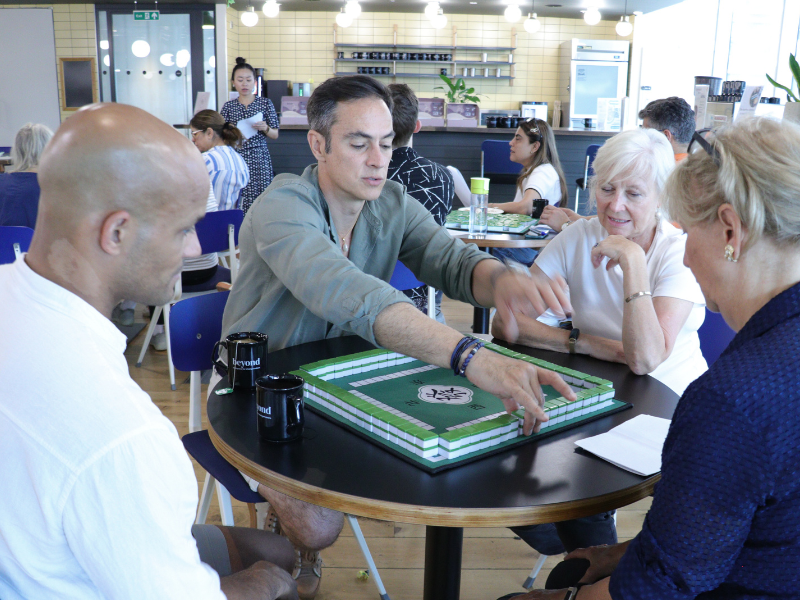
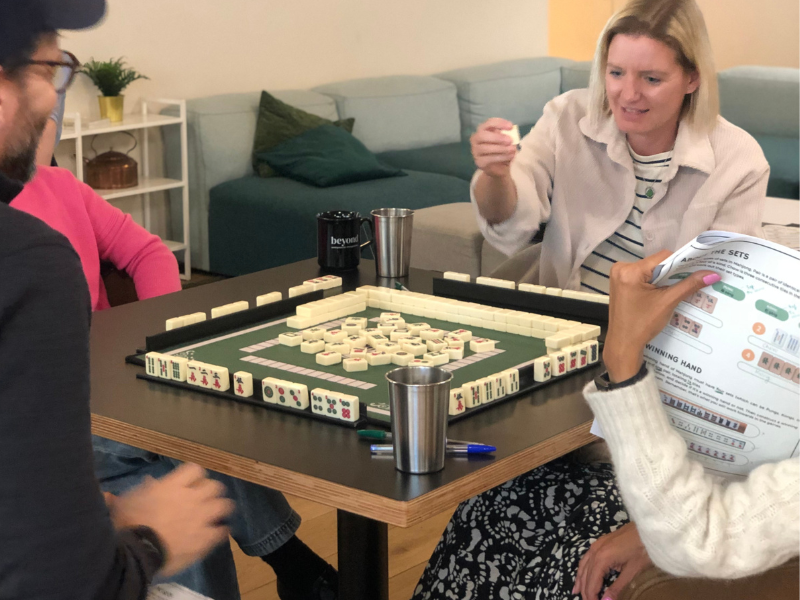
Dear Asia London run regular Mahjong workshops designed for beginners, where you’ll learn the rules, basic strategies, and the cultural meaning behind the game—not just how to play, but how to read the table and enjoy the social side of Mahjong.
Whether you’re completely new or inspired by the film, our sessions are a relaxed and welcoming way to get started.
If you’ve ever wondered why Mahjong is so popular or wanted to try it for yourself, this is the perfect place to begin.
#mahjong_dearasia
London Mahjong School
Join Dear Asia, London’s vibrant Mahjong school! Attend our fun Saturday workshops or hire a private instructor to host exciting Mahjong events at home or work. Let’s make your next gathering unforgettable!