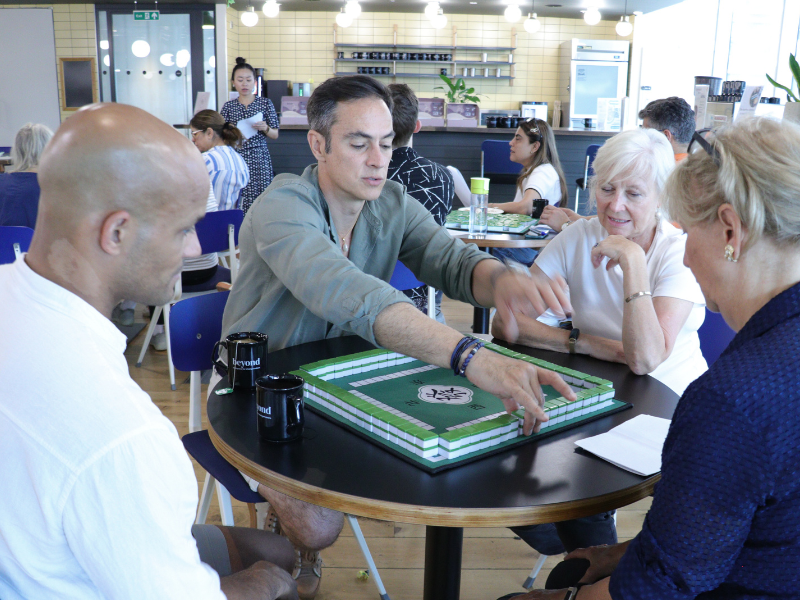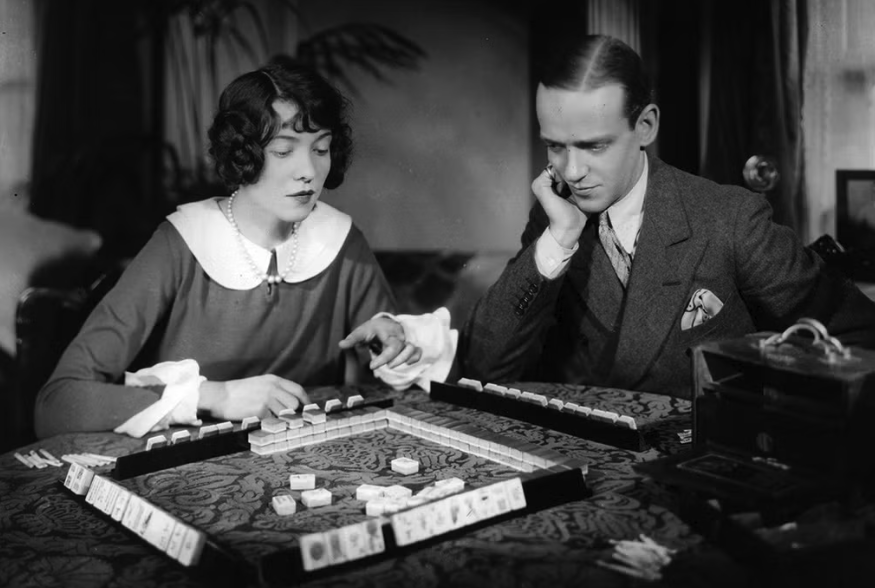
Mahjong is one of the world’s most fascinating games. Walk into a Mahjong table in China, Japan, or the U.S., and you’ll notice differences, not just in the tiles, but in rules, scoring, and even the game’s pace. What’s particularly interesting is that the more we know about Mahjong, the more we find British Mahjong interesting, it’s basically a version that blends elements from Chinese, Japanese, and American styles into a game.
If you’re a Mahjong player or a beginner curious about the game, understanding how these influences shaped British Mahjong gives a deeper appreciation for the game, and also highlights how learning Chinese Mahjong first makes it easy to pick up other versions.
British Mahjong uses Chinese mahjong as foundation
Chinese Mahjong is the original form of all Mahjong games, and it laid the groundwork for most modern Mahjong variations, including British Mahjong.
- Tile Sets: British Mahjong uses the classic 144-tile set, including Dots, Bamboo, Characters, Winds, Dragons, and bonus tiles like Flowers and Seasons, directly inherited from Chinese Mahjong.
- Basic Melds: The core goal of completing pungs (three of a kind), chows (sequences), kongs (four of a kind), and a pair comes straight from traditional Chinese play.
- Winning Hands: While British Mahjong employs a different scoring system, the fundamental structure of forming four melds plus a pair mirrors the Chinese rules. However, when it comes to special hands, British Mahjong offers a variety of unique options that even seasoned Chinese players may not be familiar with or might hesitate to attempt. Examples include intriguing hands like the Wiggling Snakes and Triple Knitting…
- Bonus Tiles: Flowers and Seasons are retained, but the scoring system is different to count their contributions.
In short, Chinese Mahjong provides the core structure and terminology that makes British Mahjong feel familiar to anyone who’s ever played the traditional game.
British mahjong uses Japanese mahjong for scoring
Japanese Mahjong, or Riichi Mahjong, is known for its standardized hand patterns, faster gameplay, and strategic depth. British Mahjong borrowed several elements from this style, particularly in clarity and pace.
- Scoring structure: Japanese Mahjong emphasises standard hand patterns called yaku. British Mahjong similarly provides predefined hands that players can aim for, making it easier to know which combinations are valid. The calculations of scoring though is similar, because the scores are going into the hundreds and thousands, using tally sticks could be common between the two versions.
- Formality: Japanese Mahjong incorporates several formalities during play, such as neatly placing discarded tiles and using tile positioning to indicate which player has created chow or pung sets. While we’re unsure if British formal games follow the same conventions, we suspect that they may uphold more formalities during gameplay compared to the casual, family-oriented style commonly seen in Chinese Mahjong.
These Japanese influences help British Mahjong maintain a structured, engaging, and social feel, even though the scoring is simpler than traditional Riichi rules.
#mahjong_dearasia
We know learning Mahjong on your own is hard—and not very fun. Dear Asia is the Mahjong school you’ve been looking for. Based in London, book tickets for our regular Saturday workshops below or hire our private Mahjong instructors.
British mahjong uses american mahjong for add-ons
American Mahjong introduced pattern-based cards, colourful tile sets, and social club-style play, which also influenced British Mahjong, particularly in scoring, hand patterns, and beginner accessibility.
- Pattern-Based Hands: American Mahjong uses cards showing suggested winning combinations. British Mahjong borrowed this idea by offering predefined scoring hands, making it easier for beginners to understand what a winning hand looks like.
- Charleston or Goulash: In American Mahjong, the process of exchanging tiles before the start of a game is known as Charleston. This adds an element of fun to kickstart the game and provides valuable clues about what opponents might be aiming for, based on their discarded tiles at this stage. In British Mahjong, there isn’t a similar exchange for every game; however, the Goulash rule comes into play when a normal game ends in a draw. Goulash includes tile exchanges, the use of joker tiles, and prohibits ‘chow,’ which essentially aligns it with American Mahjong!
So you can see how British Mahjong besides its regular play book, all of a sudden, by adding Goulash, it brings in all of the American Mahjong features to create a new style of a game. We think it’s fun!
british mahjong is like all in one!
When you play British Mahjong, you can see the fusion of international styles:
- Chinese Influence: Classic 144-tile set, pungs, chows, kongs, pair, and bonus tiles.
- Japanese Influence: Predefined winning hands and scoring.
- American Influence: All of the extra rules in a Goulash game when a draw happens.
The result is a unique style that is accessible to beginners, engaging for intermediate players, and social and fun for all. British Mahjong manages to honor tradition while adapting to modern social gameplay, which is part of its charm.
Why Learning Chinese Mahjong First Helps
If you know Chinese Mahjong, picking up British Mahjong or other international versions like Japanese or American Mahjong becomes much easier. That’s because:
- Tile Sets Are Similar: Most styles use the same Dots, Bamboos, Characters, Winds, Dragons, and bonus tiles.
- Basic Melds Are Consistent: Pungs, chows, kongs, and a pair remain the core building blocks.
- Scoring Concepts Overlap: Many international styles are variations or simplifications of Chinese scoring, so understanding the fundamentals helps you adapt quickly.
In other words, mastering Chinese Mahjong gives you a universal foundation, making it easier to explore British, Japanese, or American Mahjong without starting from scratch.
do you want to learn british mahjong?
British Mahjong is often described as a “fusion game”, a curious mix that feels familiar yet new. It’s beginner-friendly, social, and strategic, yet it borrows its rules, scoring ideas, and gameplay mechanics from three major Mahjong traditions. For anyone learning Mahjong today, it’s a great example of how the game has evolved internationally while staying rooted in its Chinese origins.
Even if your focus is on traditional Chinese Mahjong, exploring British Mahjong can give you insight into how Mahjong adapts across cultures. It shows how the same game can be made approachable, structured, and fun for different audiences.
Want to hire us?
London Mahjong Instructors
Our Mahjong instructors are professional teachers who know how to teach anyone to play—quickly, practically, and in a fun, social way. Read our reviews to see how well we do. Book us for your event—we’ve worked with celebrities, film sets, and large corporate functions!
Start with Chinese Mahjong for beginner
If learning about different Mahjong styles has sparked your curiosity, there’s no better place to start than Chinese Mahjong, the original version from which all other styles developed. Dear Asia London’s Chinese Mahjong Workshop is designed for complete beginners and gives you everything you need to start playing confidently in just one lesson. You’ll learn how to read the tiles, form winning hands, understand scoring, and develop the foundations that make it easy to explore British, Japanese, or American Mahjong later on. If you want a clear, structured, and enjoyable introduction to the game, Dear Asia’s mahjong workshop is the perfect first step.