
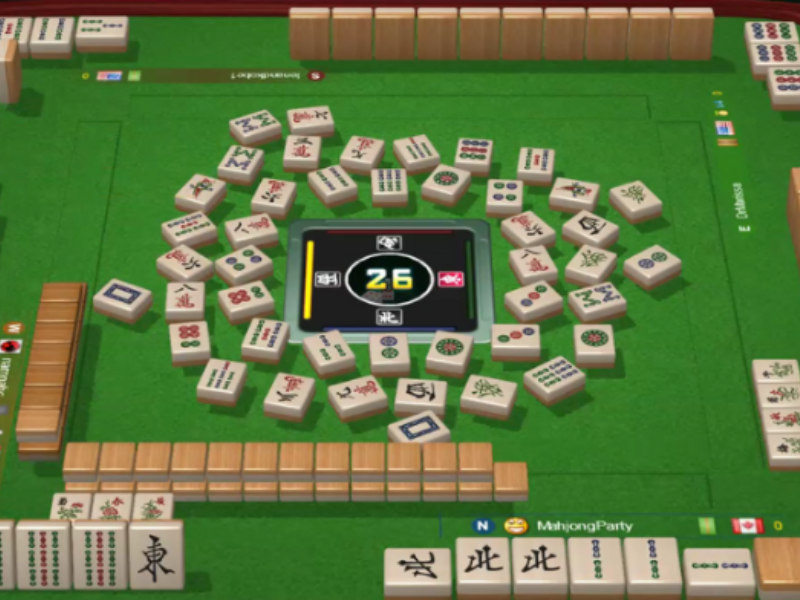
If you have ever been captivated by the rhythmic click of tiles or the quiet intensity of a mahjong table, you might have wondered: Could I learn this game on my own?
Perhaps you have even bought a mahjong set, watched some tutorials on Youtube, or downloaded an app to practise. The good news is that yes, you can learn a lot about mahjong on your own. But to truly understand it, to feel its rhythm, subtle exchanges and social energy, nothing compares to learning in person, or learning it from playing with others.
Learning Solo: The Logical Beginning
When you first encounter mahjong, it can seem like decoding a secret language. Unlike learning to play poker, there isn’t a learning curve with the cards. But Mahjong has so many tiles, combinations and rules, so it feels natural to feel the need to invest time and effort to learn all of the basics first.
At home, you can spread out your tiles, arrange them into sets, and practise recognising patterns. You can read rule guides or play against computer opponents to learn the flow of play: draw a tile, discard a tile, repeat until someone calls “Mahjong”.
Learning alone allows you to move at your own pace. You can replay tutorials, repeat digital rounds, or spend a quiet evening sorting tiles until the suits and numbers feel familiar. It is a calm, comfortable way to begin and helps you build confidence.
However, most self-learners eventually reach a plateau. You may know how to win, but not when to push for a win. You might understand the patterns, but not the flow. Mahjong, at its heart, is a social game that comes alive only when played with others.
Why Playing in Person Matters
Mahjong is a conversation in tiles. Every discard and every draw is a small signal, a whisper of intent that other players respond to. You cannot learn that rhythm from a screen or a book.
When you play in person, you notice things that no tutorial can teach:
- The way the table quietens when someone is one tile away from winning.
- The laughter that follows a surprising hand.
- The satisfaction of physically building and rearranging your tiles.
- The unspoken courtesy between players, a shared respect for the game and each other.
In-person learning transforms mahjong from a puzzle into an experience. You begin to feel the tempo of the table: when to play boldly, when to defend, when to let go. These instincts grow only when you are surrounded by people who share your enthusiasm.
The Limits of Learning Alone
When you learn alone, your greatest teacher is repetition. That is helpful at first, but it can also trap you in habits that are hard to break without feedback. You may form patterns that seem logical yet do not hold up in a real game.
You also miss the subtle lessons that only emerge in live play:
- Reading other players’ discards.
- Managing the pace of a round.
- Knowing when to fold a hand and protect your points.
- Understanding table etiquette and atmosphere.
Mahjong is not only a game of skill. It is a dance of timing, intuition and connection. Playing with real people introduces unpredictability and emotion, and that is where genuine understanding begins.
It is rather like learning to cook. You can read recipes and watch videos endlessly, but once you start cooking with someone else, tasting, adjusting and laughing at mistakes, everything suddenly makes sense.
#mahjong_dearasia
We know learning Mahjong on your own is hard—and not very fun. Dear Asia is the Mahjong school you’ve been looking for. Based in London, book tickets for our regular Saturday workshops below or hire our private Mahjong instructors.
The Confidence of Learning Together
For many beginners, joining an in-person class can feel intimidating. You might worry about slowing others down, making mistakes, or forgetting the rules. Yet the wonderful thing about mahjong is that everyone, no matter their level, has been there before.
A good workshop gives you structure and support. You learn step by step, with someone there to answer questions, explain tricky rules, and help you see the reasoning behind each move. You also start playing straight away, not just studying, which helps the lessons sink in much faster.
Most importantly, you are surrounded by others who share your curiosity. The group energy keeps you motivated. You laugh together, celebrate small successes and enjoy the satisfaction of each new skill learned.
A Game Meant to Be Shared
Mahjong was never meant to be played alone. It has always been a social ritual, an excuse to gather, talk and share food while the tiles move steadily across the table. Families pass down their own house rules, friends tease one another over lucky wins, and communities form around weekly games.
Learning in person brings you into that tradition. It connects you not only to the rules but to the feeling of mahjong, that balance of focus and fun. You stop seeing the tiles as mere symbols and start seeing them as part of a shared story.
Once you have learned that rhythm, every future game, whether at home, online or with new friends, feels richer, more alive and more human.
How to Start the Right Way
If you are considering learning solo, here is a good way to begin, and an even better way to continue.
- Start with the basics.
Get to know the tiles and the basic structure of a hand. Understanding your Pungs, Chows and Kongs makes everything smoother later on. - Play a few digital games.
Online platforms can help you understand the flow of play. They are excellent for repetition and memorisation. - Then, find a class or club.
This is the turning point. In a real setting, you can apply what you have learned, ask questions and receive guidance from experienced players. - Keep playing with others.
The more you play, the more natural it becomes. You will start reading the table, predicting outcomes and enjoying the game on a deeper level.
It is not about abandoning solo learning, but enhancing it. Combining self-study with in-person practice gives you both confidence and connection.
Which style of Mahjong to learn
If you are new to mahjong, begin with the classic Chinese version. It is straightforward, elegant and widely played, making it the best foundation for learning.
Its clear scoring system, open play style and emphasis on logic help beginners understand the fundamentals without feeling overwhelmed. Once you are comfortable, you can easily explore other regional variations, but classic mahjong is where the heart of the game truly lies.
Want to hire us?
London Mahjong Instructors
Our Mahjong instructors are professional teachers who know how to teach anyone to play—quickly, practically, and in a fun, social way. Read our reviews to see how well we do. Book us for your event—we’ve worked with celebrities, film sets, and large corporate functions!
Where Learning Becomes Belonging
If you have been learning solo and are ready to take the next step, that is exactly what the Dear Asia London Mahjong Workshop is here for.
Our workshops are perfect for beginners who want to start with classic Chinese mahjong, guided by experienced players in a relaxed, hands-on environment. You will learn not just the rules but the flow, the etiquette and the strategies that bring the game to life, all while connecting with others who share your interest.
Whether you are shuffling your first tiles or refining your strategy, learning in person transforms the experience. It is where the pieces truly come together, not only on the table but between people. Because mahjong is not something you simply learn. It is something you share, one shuffle, one hand, one quiet moment at a time.


